
DIY Lotion Bar Recipe With Beeswax
Want to learn how to make your own DIY lotion bars at home?
These homemade body lotion bars are surprisingly simple to make and only require a few ingredients.
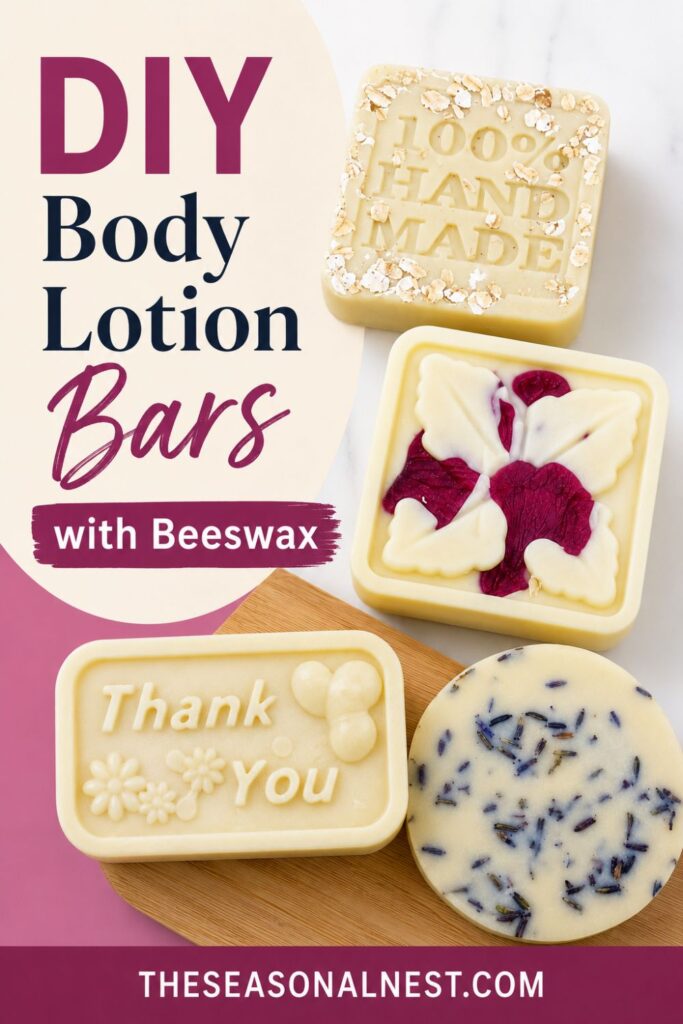
Melt everything together, pour the mixture into molds, let the bars harden, and they’re ready to use.
An easy way to keep your skin moisturized without the mess of traditional body lotions.
But what exactly are lotion bars?
They look like soap but are kind of solid balms for the body.
They are made with a mixture of butter, oils, and waxes, and their main aim is to protect the skin and keep it moisturized.
Very handy for winter months and windy days when the skin tends to be drier.
Lotion bars can be applied to the whole body but are especially good for drier parts like elbows, knees, heels, and even lips.
Got a drier patch on your skin? Apply that moisturizing lotion bar to get smoother skin instantly.
OK, let’s make it!
This post contains affiliate links. In the event of a sale, I get rewarded a small commission, at no extra cost to you.
Easy Homemade Lotion Bar Recipe
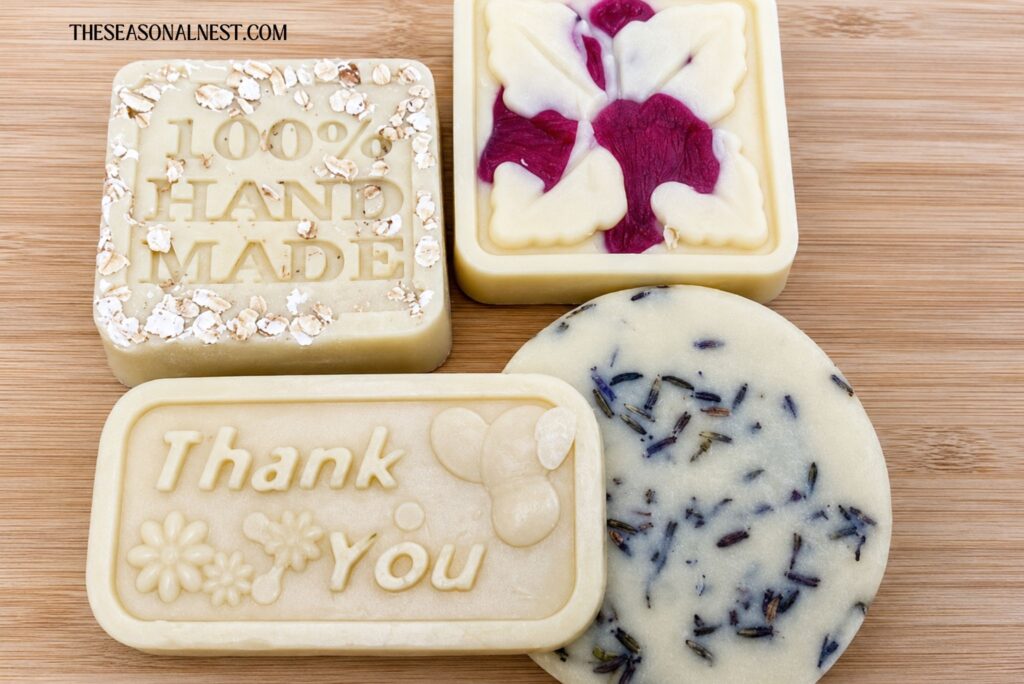
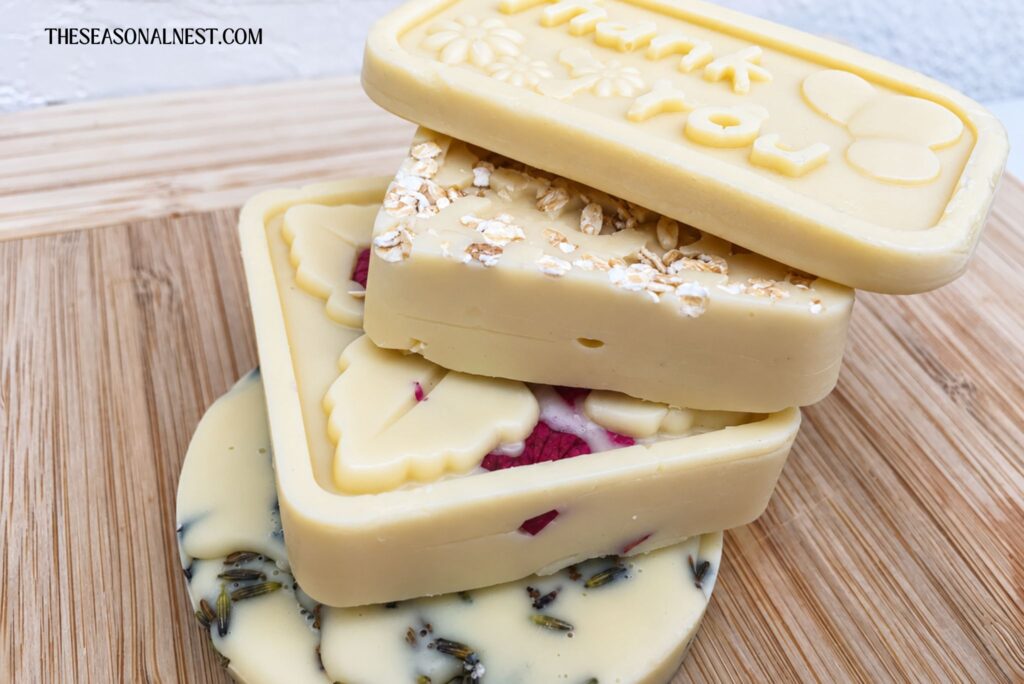
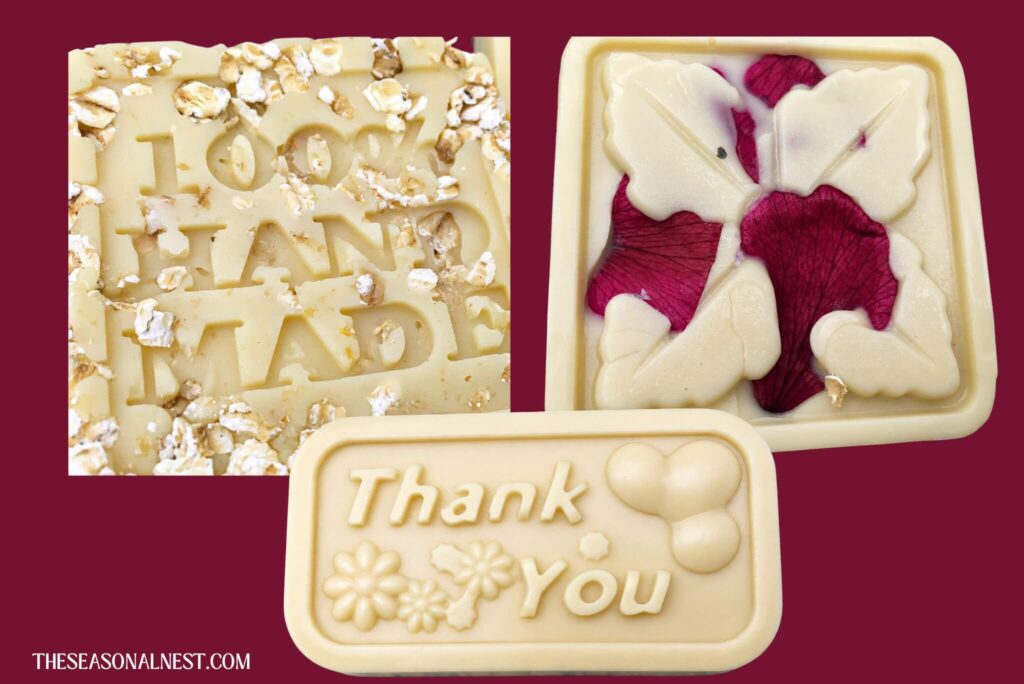
I have made 4 lotion bars with different designs.
The ingredients are the same in all of them; the only difference is that I have added fresh rose petals, lavender seeds, and oatmeal.
I wanted to make a non-greasy lotion bar recipe and have added cornstarch in the hope that it will absorb some of the oil, but even if it does, the lotion bars will still be oily because they are made with beeswax and oils.
The beeswax is added to harden the lotion bars, but I have seen recipes without beeswax.
In fact, I have made them myself (see recipe here) to see if they hold their shape, and they did.
If you are not a fan of beeswax, try using a different kind of wax or no wax at all.
Ingredients you need:
- 45 g beeswax
- 20 g cornstarch
- 40 g shea butter + cocoa butter combined
- 35 g jojoba oil
- 20 g coconut oil
- 1 tsp vitamin E
Increase or decrease the quantities to make a bigger or smaller batch.
I have used silicone molds like these, which are very easy to unmold.
How to make it:
Place the beeswax, Shea butter, coconut oil, and cocoa butter in a water bath over low heat.
Once they are melted, add the oils: jojoba and almond.
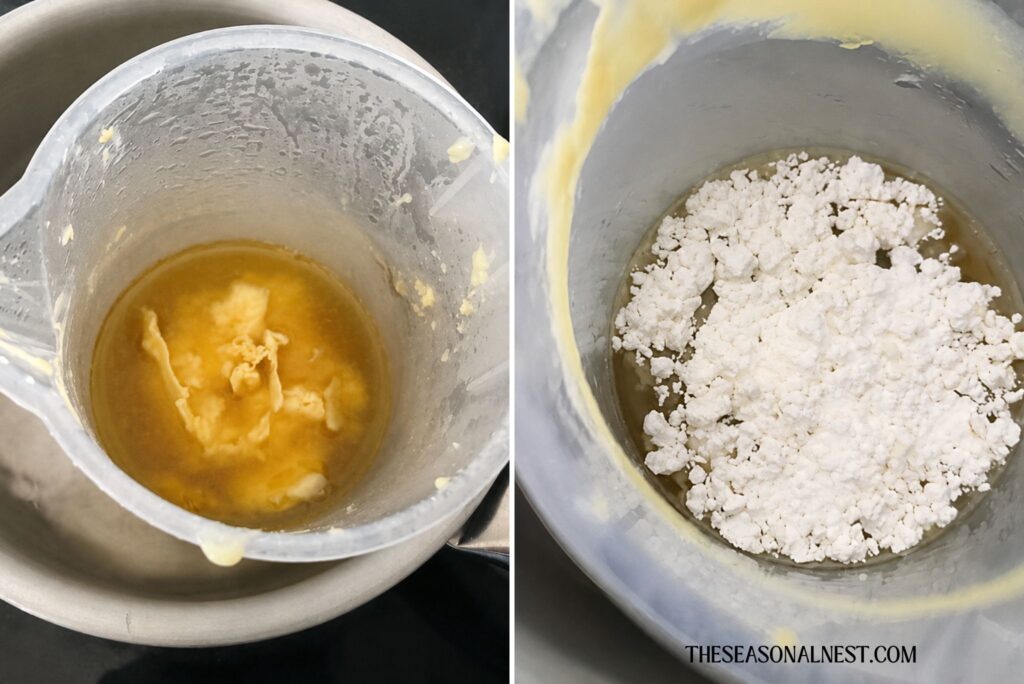
Add cornstarch, and keep stirring until it is completely dissolved.
Make sure you have the molds ready with the ingredients you want to use.
It is important to be fast because beeswax sets really quickly.
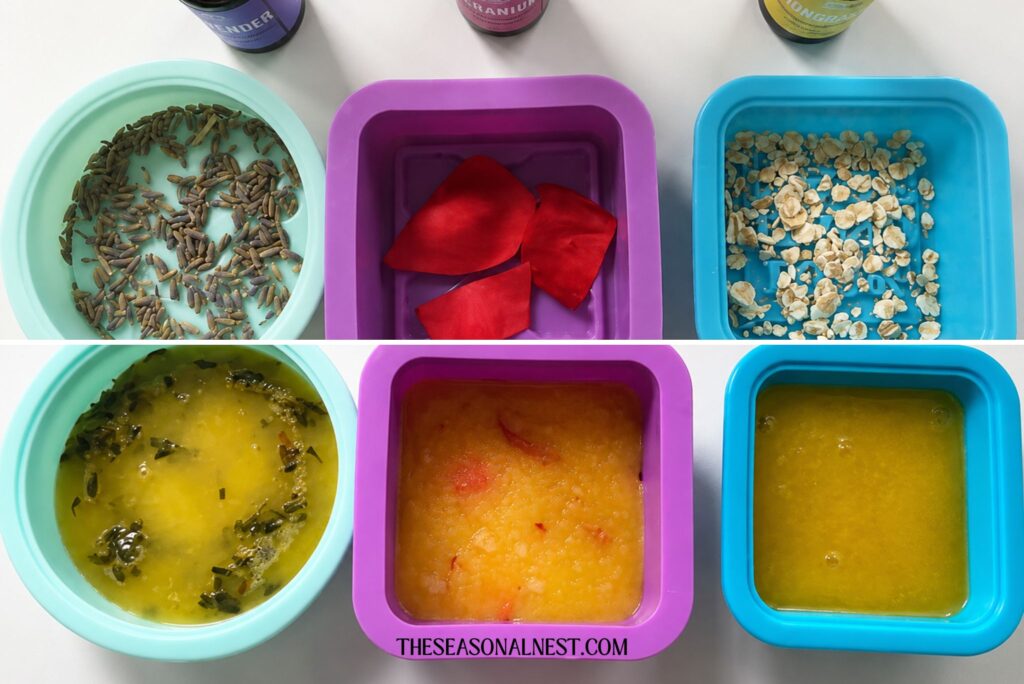
Add a layer of the melted oils and wait until it sets.
Once it has been set, add another layer.
As you can see, I have added a second layer of lavender seeds, rose petals, and oatmeal.
Note: If you want to add rose petals is better to use dried roses as fresh petals will turn dark.
Pour the remaining oils on top of the ingredients.
Wait a moment for them to harden and place them in the freezer for about 30 minutes.
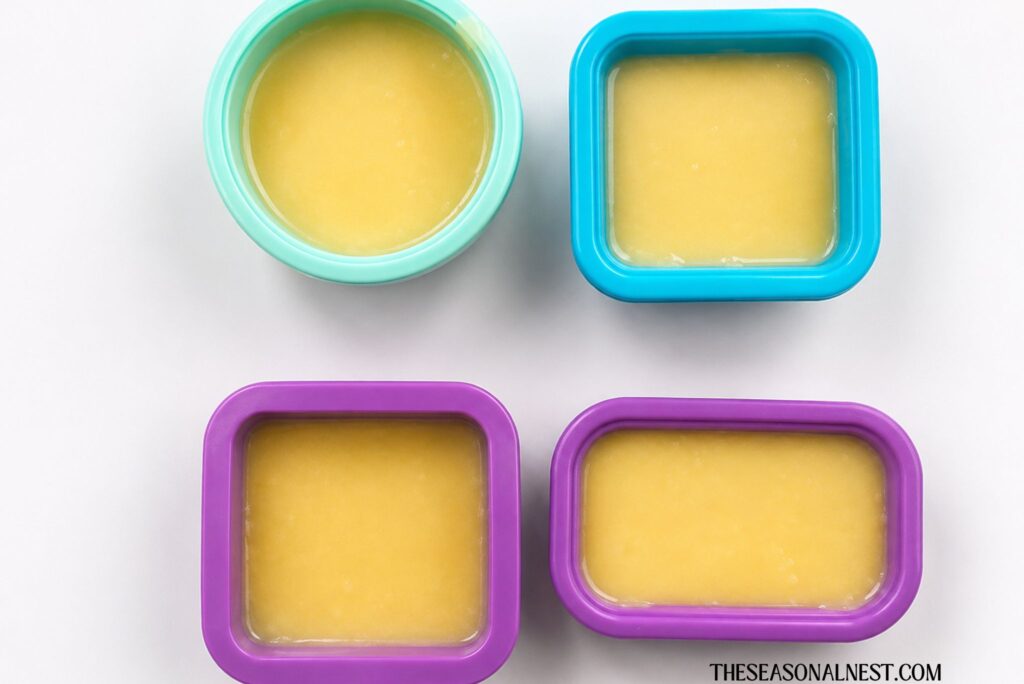
Make sure the lotion bars are completely set before unmolding.
Keep them in a non-plastic container and in a dark, cool place.
If stored properly, they should last for a long time (+ 12 months).
✅ DIY skin care recipes you can make at home:
- Want to moisturize your lips naturally? Make this easy DIY lip balm.
- Here is an excellent homemade cream to firm the skin.
- Use this homemade cream to reduce stretch marks.
- A collection of more than 50 beauty recipes
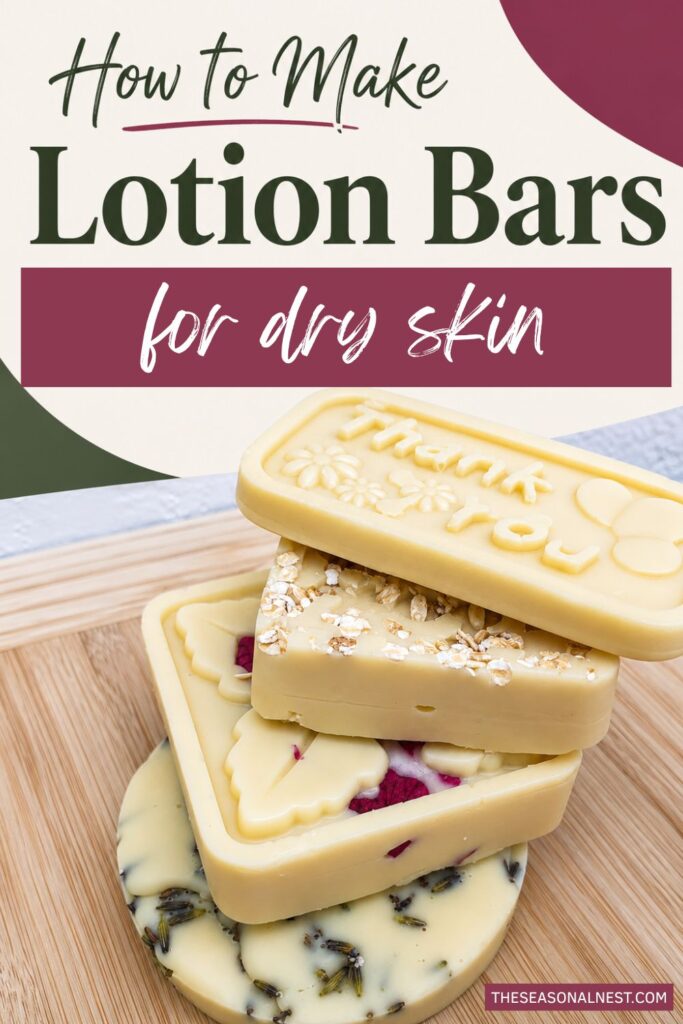
How Do You Use Solid DIY Lotion Bars?
To use, simply rub the lotion bar directly over a dry skin patch and massage it with your hands until it is well absorbed.
Or, you could rub your hands with the lotion bar first and then massage it in any part of the body.
Personally, I like to use them over stretch marks.
How Do You Store Homemade Lotion Bars?
Since lotion bars are very sensitive to heat, you need to keep them in a dark and cool place, far from sunlight and heat.
If you live in a hot climate, the best place to keep them is probably in the fridge.
If you want to have them on display, arranging them in a basket with tissue paper looks cute.
You could also place them in tin containers wrapped in tissue paper and use them on the go.
If you’re allergic to coconut oil is there an alternative?
Yes, of course. Coconut oil is not essential to make these lotion bars so you don’t need to add it. Or you could substitute the coconut oil for any other oil you like. Avocado, sunflower, olive or apricot kernel are good choices.